Shower Tile in Gilbert, AZ
Shower tile selection and installation quality make or break how a shower performs in Gilbert over the long run — not just how it looks on installation day, but how it holds up to daily use, hard water, and safety underfoot. Custom shower tile installation typically costs $10,000 to $18,000 as part of a full replacement, or less as a component of a larger remodel, with the tile and grout choices themselves driving much of that range. Ironwood Bath & Remodel selects and installs shower tile with three things in mind simultaneously — design, hard-water performance, and genuine slip safety — because getting only one of those right isn’t actually getting the job done.
See our full Bathroom Remodel Cost Guide for pricing across every project type, and our Shower Remodeling pillar page for how tile fits into a broader shower project or Bathroom Tile.
Tile Types for Gilbert Showers
Porcelain Tile
Dense, low-absorption, and highly durable, porcelain is generally our top recommendation for Gilbert acrylic shower walls and floors specifically because of local water conditions. Its low porosity means it takes on far less mineral content from hard water than more porous materials, which translates directly into less staining and a longer-lasting finish.
Ceramic Tile
Ceramic offers a lower-cost alternative to porcelain with a wide range of design options, though it’s generally somewhat more porous and slightly less durable over the long term. It remains a reasonable choice for shower walls, particularly outside the direct spray zone, where the durability difference matters less.
Natural Stone Tile
Marble, travertine, and similar natural stone tiles are genuinely beautiful, but they’re porous and vulnerable to both hard-water etching and staining without a properly maintained sealant. We typically recommend natural stone as an accent rather than the primary shower surface in Gilbert, given the maintenance commitment it requires against our water.
Glass Tile
Glass tile is completely non-porous, which makes it naturally resistant to hard-water staining, and it’s often used as an accent band or niche liner to add a design element that also happens to be genuinely low-maintenance.
Tile Size and Format: What Actually Matters
Large-Format Tile on Walls
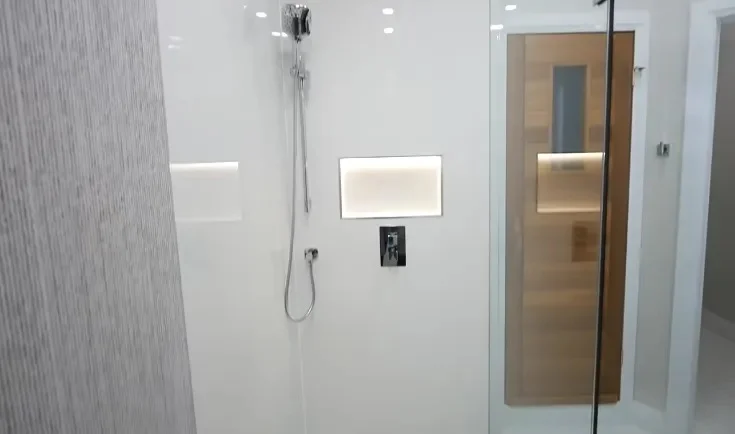
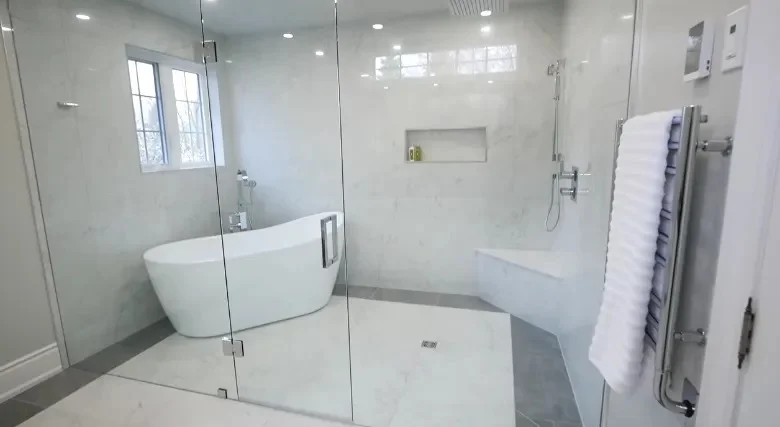
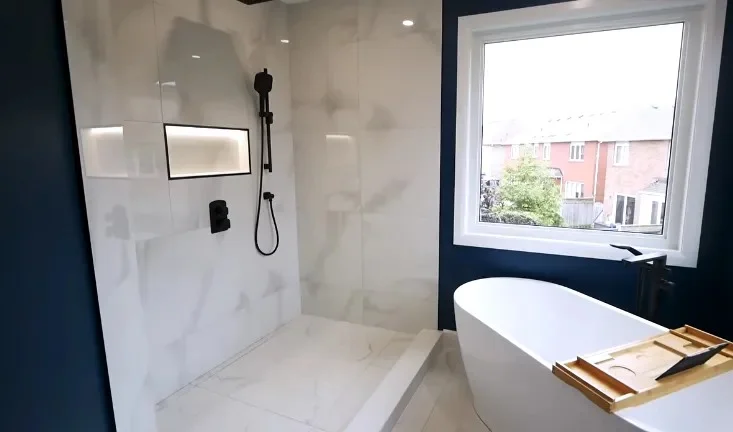
Bigger tiles mean fewer grout lines, and fewer grout lines mean less total surface area where mineral staining can take hold. This is a genuine functional advantage in Gilbert’s hard water, not just a design preference, which is why large-format tile has become our most frequently recommended wall option.
Small-Format or Mosaic Tile on Shower Floors
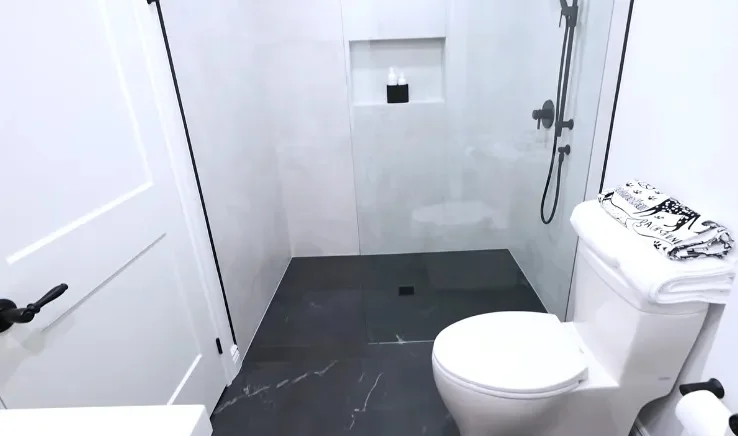
Shower floors need a different approach than walls. Because the floor is sloped toward a drain and gets direct, standing water contact, smaller tile — often 1 to 2 inch mosaic format — is generally recommended, since the increased number of grout lines improves traction underfoot even as it requires more maintenance than a large-format wall tile would.
Why Floor and Wall Tile Choices Genuinely Differ
It’s common for homeowners to want one seamless tile throughout a shower, but the functional requirements of a sloped, standing-water floor are different enough from a vertical wall that we typically recommend different tile formats for each, even when using a coordinated color and style.
Slip Resistance: A Real Safety Standard, Not Just a Design Choice
This is a detail few remodeling companies discuss upfront, and it matters. The tile industry uses a measurement called DCOF — Dynamic Coefficient of Friction — to rate how slip-resistant a tile is when wet. The American National Standards Institute’s A137.1 standard requires a minimum wet DCOF of 0.42 for any tile recommended for level interior spaces expected to be walked on while wet, and industry guidance generally recommends an even higher rating, closer to 0.60, specifically for showers and other high-risk wet areas. We select shower floor tile with genuine slip resistance in mind, not just visual appeal, because a beautiful shower floor that’s dangerously slippery when wet isn’t actually a good outcome for anyone using it daily.
Grout: The Detail That Determines How Your Shower Ages
Cement-Based Grout
Traditional cement-based grout is more affordable and offers a wide range of color options, but it’s porous by nature and requires regular sealing to resist hard-water staining and mildew, particularly in a Gilbert shower’s constant moisture exposure.
Epoxy Grout
Epoxy grout is significantly more resistant to staining, mildew, and hard-water mineral buildup than cement-based grout, since it’s non-porous by design. It costs more upfront and is somewhat more involved to install correctly, but for a Gilbert shower floor and lower walls specifically, it’s frequently the better long-term choice given how much less maintenance it demands against our water.
Grout Color Strategy
Lighter grout shows hard-water mineral staining more visibly than darker grout, which is a genuine practical consideration worth weighing alongside pure aesthetic preference, especially for grout lines in direct, constant water contact.
Popular Shower Tile Patterns in Gilbert
Classic Subway Tile
A timeless, straightforward pattern that works well in nearly any bathroom style and tends to age gracefully rather than reading as trend-specific years later.
Herringbone
A more visually dynamic layout using rectangular tile set at an angle, often used as a feature wall or accent within a shower rather than across the entire space.
Large-Format Stacked
A clean, minimal look using large tiles set in a simple grid, which pairs naturally with the fewer-grout-lines, hard-water-resistant approach we generally recommend for shower walls.
Accent Niches and Feature Strips
A contrasting tile or a band of glass or natural stone accent within a wall niche or as a horizontal band adds visual interest without committing an entire shower to a bolder pattern.
Our Shower Tile Process
1.
Phone Consultation
Call (480) 696-6664 and describe your current shower or the style direction you’re considering. We’ll give you honest guidance before scheduling an in-home visit.
2.
In-Home Evaluation & Tile Selection
We measure your space and help you select tile type, size, and pattern together, with both design and Gilbert’s specific water and safety considerations factored in from the start. Our full Bathroom Design & Planning page covers this phase in detail.
3.
Fixed, Written Proposal
A complete scope of work and a locked price, including your specific tile and grout selections, before installation begins.
4.
Proper Installation
Correct waterproofing beneath the tile, precise setting and leveling, and appropriate grout application, followed by a final walkthrough. Tile installation quality is where a shower’s long-term performance is genuinely decided, more than almost any other single factor.
What Shower Tile Costs in Gilbert
| Tile Component | Typical Cost Range† | Notes |
|---|---|---|
| Porcelain tile, standard installation | Included in $8,000–$18,000 shower replacement range | Most common recommendation for Gilbert |
| Natural stone accent | +$1,000 – $3,000 | Used selectively given maintenance needs |
| Epoxy grout upgrade | +$500 – $1,500 | Significantly more hard-water resistant |
| Custom pattern (herringbone, etc.) | +$800 – $2,500 | Additional labor for pattern complexity |
Tile and grout choices are typically priced as part of your full shower project rather than as a standalone line item. See our full Bathroom Remodel Cost Guide and Shower Remodeling page for complete project pricing.
Tile Built for Gilbert’s Hard Water
Gilbert’s water averages 8 to 10 grains per gallon according to the Town of Gilbert’s own published data, and tile is one of the surfaces most affected by that mineral content over time, particularly at grout lines. We recommend porcelain over more porous materials, epoxy or well-sealed cement grout, and large-format wall tile specifically because these choices measurably reduce how much maintenance a Gilbert shower needs to stay looking new. Full detail on our Gilbert’s Hard Water and Your Bathroom Remodel page.
Frequently Asked Questions About Shower Tile in Gilbert
Ready to Choose Your Shower Tile?
Call Ironwood Bath & Remodel at (480) 696-6664 or Contact us to schedule your free in-home consultation. We’ll walk through tile, size, and grout options with both design and Gilbert’s water in mind, and give you a fixed price before anything is torn out. 2174 E Williams Field Rd, Gilbert, AZ 85295 · Serving Gilbert, Chandler, Mesa, Queen Creek & Tempe · Open Monday–Sunday, 9am-8pm