Gilbert’s Hard Water and Your Bathroom Remodel: What Every Homeowner Should Know
Gilbert’s tap water is hard — averaging 8 to 10 grains per gallon, according to the Town of Gilbert’s own published water data. That mineral content is why glass shower doors haze over, chrome and nickel fixtures spot, and grout discolors faster here than in cities with softer water. If you’re remodeling a bathroom in Gilbert, the materials you choose matter just as much as the design, because the wrong finishes will look worn within a couple of years no matter how well they’re installed. Below, Ironwood Bath & Remodel explains exactly how hard water affects a bathroom, and the specific material choices we build with to fight it.
Source: Town of Gilbert Public Works water FAQ. The town recommends setting a household water softener to 10–12 grains per gallon to account for seasonal variation.
How Hard Is Gilbert’s Water, Really?
The Town of Gilbert reports average tap water hardness of 8 to 10 grains per gallon (gpg). On the Water Quality Association’s scale, water above 7 gpg is classified as “hard,” which puts Gilbert solidly in hard-water territory — though notably on the lower end compared to some neighboring East Valley cities.
1. Where Gilbert’s Water Comes From
Gilbert draws its water from a mix of the Salt and Verde Rivers, delivered through the Salt River Project, Colorado River water delivered via the Central Arizona Project, and local groundwater wells used during peak demand or canal maintenance. That blended surface-and-groundwater supply is part of why mineral content stays consistently in the hard range across the town’s distribution system.
2. A Note on the Numbers You’ll See Online
If you search for Gilbert’s water hardness, you’ll find wildly different figures — some water-softener companies advertise numbers as high as 18 to 25 grains per gallon. Those figures come from marketing material, not the town’s own reporting, and shouldn’t be treated as reliable. The number that matters, and the one this page is built around, is the Town of Gilbert’s own published figure: 8–10 gpg.
What Hard Water Actually Does to a Bathroom
Hard water leaves mineral deposits — mostly calcium and magnesium — on every surface it touches and dries on. In a bathroom, where water contacts glass, tile, and fixtures constantly, that shows up in a few specific, recognizable ways:
None of this reflects poorly on your cleaning habits. It’s simple chemistry — and it’s exactly why a bathroom built with generic, big-box materials tends to age faster in Gilbert than the same bathroom would in a city with softer water.
1. Cloudy, Spotted Shower Glass
This is the classic Gilbert complaint, and it’s not a cleaning problem. That haze is mineral scale bonding to the glass surface, and past a certain point, no amount of scrubbing removes it — the minerals have effectively etched into the glass.
2. Spotting and Pitting on Fixtures
Chrome and nickel faucets and showerheads lose their shine faster in hard water and can develop pitting or corrosion over time as mineral deposits build up in the finish.
3. Discolored, Deteriorating Grout
Minerals work into grout lines over time, staining them and gradually breaking down the grout itself, especially in showers that don’t get properly ventilated between uses.
4. Scale Buildup Inside Showerheads and Valves
Mineral scale accumulates inside plumbing fixtures themselves, reducing water flow and shortening the functional life of your shower system well before it’s visibly worn on the outside.
How We Design Gilbert Bathrooms to Beat Hard Water
This is the part almost no other Gilbert remodeler addresses. Here’s specifically how Ironwood builds against our local water conditions:
Treated and Coated Frameless Glass
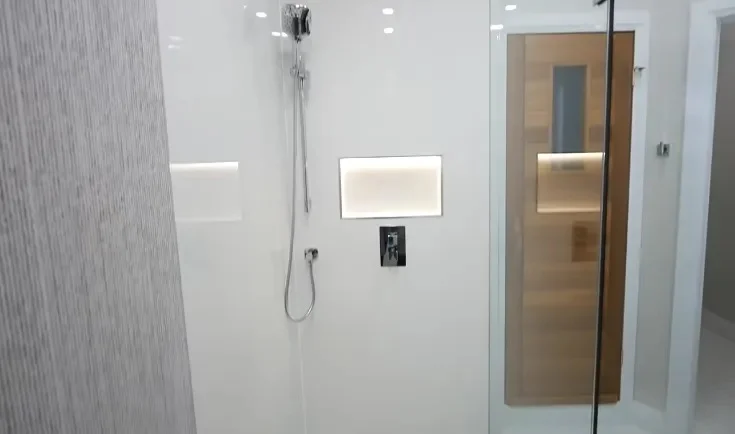
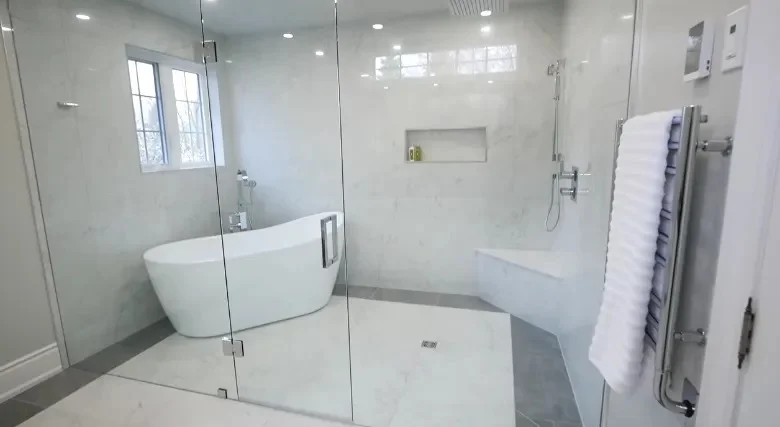
We recommend shower glass with a factory-applied protective coating designed to resist mineral bonding. It doesn’t eliminate hard water’s effects entirely, but it dramatically slows the hazing process and makes the glass far easier to keep clear with routine squeegeeing.
Quartz Over Porous Natural Stone
Quartz countertops are non-porous and resist mineral staining far better than many natural stone options, which require regular sealing and are more vulnerable to hard-water etching around the sink basin.
Porcelain Tile With Properly Sealed Grout
Porcelain is dense and low-absorption, which limits how much mineral content it can take on. Paired with a quality, properly sealed grout — or an epoxy grout in high-splash areas like the shower floor — it resists the staining that wrecks cheaper tile installations within a few years.
Fixtures and Valves Built for Scale Resistance
We steer clients toward fixtures with finishes and internal cartridges rated to hold up against mineral buildup, so your showerhead and valve aren’t the first components to fail.
A Note on Whole-Home Water Softeners
Many Gilbert homeowners run a whole-home softener, and if you already have one, it protects your new bathroom too. We design every bathroom to hold up to hard water regardless of whether a softener is installed, but if softening is something you’re considering, it’s worth raising during your design consultation. (Softening itself is a separate plumbing decision from a bathroom remodel, but the two are worth discussing together.)
Why This Matters More in Gilbert’s Older Homes
Much of Gilbert was built around 2003, so a significant share of the bathrooms we remodel have had two decades of hard water working on them continuously. In older bathrooms across communities like Power Ranch, Val Vista Lakes, and the 85298 area, we routinely find hard-water damage layered on top of aging or failing waterproofing — hazed glass, crumbling grout, and sometimes hidden water damage behind the tile where a mineral-clogged or leaking system finally gave out. A remodel is the opportunity to reset all of it at once with materials genuinely chosen for the way Gilbert’s water behaves, not generic finishes pulled from a catalog built for a different climate. For the full picture on what a remodel involves at this stage of a home’s life, see our Bathroom Remodel Cost Guide and Permits & HOA Guide.
Does Hard Water Affect Every Part of the Bathroom?
Not equally. Here’s a quick honest breakdown of where hard water matters most versus where it’s a lower priority:
High Impact
Shower glass, chrome and nickel fixtures, grout lines, and showerhead/valve internals see the most visible and functional damage from hard water over time.
Moderate Impact
Countertops and sinks show staining more slowly than glass or grout, but porous materials like unsealed natural stone are still vulnerable around the basin.
Lower Impact
Flooring tile away from direct water contact, cabinetry, and lighting fixtures are largely unaffected by water hardness and can be selected based on style and budget rather than hard-water performance.
Knowing where hardness actually matters helps you spend your budget where it counts — upgrading glass treatment and grout quality matters more than upgrading, say, cabinet hardware, if hard-water durability is a priority for you.
Frequently Asked Questions About Gilbert’s Hard Water and Bathroom Remodeling
Build a Bathroom That Still Looks New in Gilbert’s Water
Getting a bathroom that stays looking new despite Gilbert’s water takes the right materials, chosen specifically for local conditions, and correct installation from the start. 2174 E Williams Field Rd, Gilbert, AZ 85295 · Serving Gilbert, Chandler, Mesa, Queen Creek & Tempe · Open Monday–Sunday, 9am-8pm ·